
Radiation Protection Gloves
Protect your hands with radiation protection gloves designed for the demands of modern healthcare environments. Our X-ray gloves help reduce exposure to scatter radiation while maintaining the comfort, dexterity, and tactile sensitivity clinicians need during diagnostic and interventional procedures. Available in lead and lead-free options, our solutions provide a range of protection levels to support diverse clinical applications, helping you balance safety, performance, and precision.
Showing all 3 results
-

FreeGuard® Gloves – Lead Free & Latex Free
Starting at: $319.00Premium lead-free, latex-free sterile gloves engineered for comfort, dexterity, and reduced hand fatigue. Featuring curved fingers and powder-free construction, they are available in box and case quantities to support clinical purchasing needs. Available in .22 mm and .30 mm glove thicknesses, with tested lead equivalencies of 0.058 mm and 0.073 mm, respectively.*
FreeGuard® Regulatory Information: FDA 510(k) Clearance K192933
-
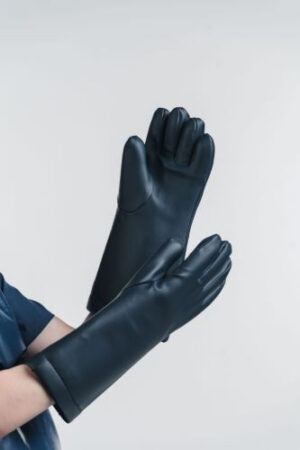
LG2 Lead Vinyl Gloves (pair)
$260.00 -

XGuard® Gloves – Leaded
Starting at: $183.00Sterile leaded radiation protection gloves available in .22 mm, .30 mm, and .60 mm glove thicknesses, with tested lead equivalencies of 0.051 mm, 0.061 mm, and 0.097 mm, respectively.* Designed with curved fingers for comfort and reduced hand fatigue, these powder-free gloves provide excellent tactile sensitivity and are available by the box or case.
XGuard® Regulatory Information: FDA 510(k) Clearance K982832
*Lead-equivalency testing performed in accordance with IEC 61331-1:2014. Test results provided by Emerson & Co. S.R.L.
Frequently Asked Questions
What are radiation protection gloves used for?
Radiation protection gloves are used to help reduce exposure to scatter radiation during diagnostic and interventional procedures such as fluoroscopy, cath lab work, and certain surgical applications. They provide an additional layer of protection for clinicians’ hands when working near ionizing radiation sources.
Should I choose leaded or lead-free gloves?
It depends on your clinical priorities:
- Leaded gloves typically offer higher attenuation and are often chosen when maximum radiation protection is the priority.
- Lead-free gloves are lighter-weight alternatives designed to reduce exposure while improving comfort and reducing material burden.
Many facilities use both depending on procedure type and required balance of protection and dexterity.
Do lead-free gloves provide the same protection as leaded gloves?
No. Lead-free gloves are designed to reduce radiation exposure, but leaded gloves generally provide higher attenuation levels. Lead-free options are typically optimized to improve comfort, flexibility, and weight while still offering meaningful scatter radiation reduction.
How much radiation do these gloves block?
FreeGuard® and XGuard® gloves are designed to reduce exposure to scatter radiation. The amount of radiation reduced (attenuation) depends on the glove model, thickness, X-ray tube voltage (kVp), and exposure conditions. A higher attenuation percentage indicates a greater reduction in radiation under the tested conditions.
FreeGuard® Gloves
- 0.22 mm thickness: Reduces radiation by 55% at 60 kVp, 44% at 90 kVp, and 37% at 120 kVp. Lead equivalency: 0.058 mm Pb.
- 0.30 mm thickness: Reduces radiation by 61% at 60 kVp, 49% at 90 kVp, and 42% at 120 kVp. Lead equivalency: 0.073 mm Pb.
XGuard® Gloves
- 0.22 mm thickness: Reduces radiation by 50% at 60 kVp, 39% at 90 kVp, and 32% at 120 kVp. Lead equivalency: 0.051 mm Pb.
- 0.30 mm thickness: Reduces radiation by 57% at 60 kVp, 46% at 90 kVp, and 38% at 120 kVp. Lead equivalency: 0.061 mm Pb.
- 0.60 mm thickness: Reduces radiation by 75% at 60 kVp, 62% at 90 kVp, and 54% at 120 kVp. Lead equivalency: 0.097 mm Pb.
Lead equivalency compares the glove’s radiation attenuation with that of a specified thickness of lead.
Testing was performed in accordance with IEC 61331-1:2014, with results provided by Emerson & Co. S.R.L.
Important: These gloves are intended to reduce exposure to scatter radiation. They must not be used in the primary X-ray beam.
Are they flexible enough for fine motor control?
Yes. Radiation protection gloves are specifically engineered to balance protection with usability. Designs often prioritize:
- Enhanced flexibility
- Curved-finger construction
- Improved tactile sensitivity
This helps support fine motor control required in interventional and surgical procedures.
FreeGuard and XGuard are registered trademarks of Emerson & Co.